H4 vs H7 vs 9005/9006: Ultimate LED Headlight Bulb Base Guide by Market
Understanding led headlight bulb bases is critical for auto parts distributors, retailers, and workshop owners. Stocking the wrong bulb base for your local market can lead to dead stock, fitment complaints, and unnecessary returns. Understanding the differences between H4, H7, 9005, and 9006 helps distributors build more relevant inventories and reduce sourcing risks.
In this comprehensive guide, we will break down the technical differences between these common bulb bases, examine their typical regional applications, and highlight the fitment issues that B2B buyers should consider when sourcing LED headlight bulbs.
Bulb Base Basics: P43t, PX26d, HB3, and HB4
Before diving into regional market trends, it is essential to understand the technical nomenclature of bulb bases. While consumers generally refer to bulbs by their “H” or numerical series, such as H4 or 9006, automotive lighting manufacturers and suppliers may also identify them using standardized base designations.
Here is the fundamental technical breakdown:
| Common Name | IEC Base Name | Beam Type | Electrical Terminals | Typical Application | Voltage / Wattage (Standard Halogen) |
|---|---|---|---|---|---|
| H4 | P43t | Dual Beam (High/Low) | 3 | Main Headlights | 12V 60/55W |
| H7 | PX26d | Single Beam | 2 | Low Beam or High Beam | 12V 55W |
| 9005 (HB3) | P20d | Single Beam | 2 | High Beam | 12V 60W |
| 9006 (HB4) | P22d | Single Beam | 2 | Low Beam | 12V 55W |
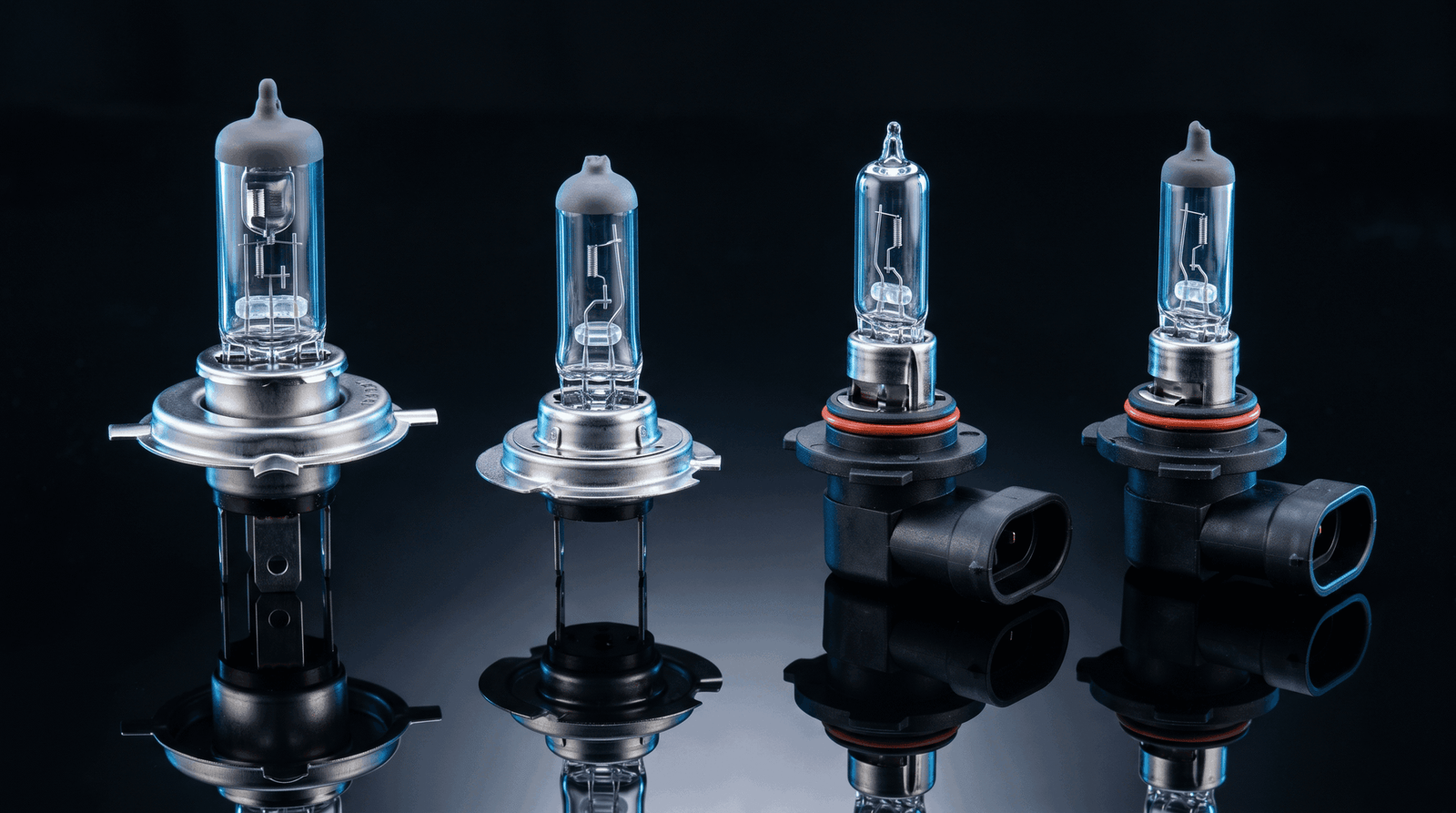
The base designation, locking mechanism, electrical connection, and beam function all influence whether a bulb will physically and electrically fit a vehicle. Understanding these differences is the first step in ensuring accurate fitment and preventing installation errors.
H4: The Global Dual Beam Standard
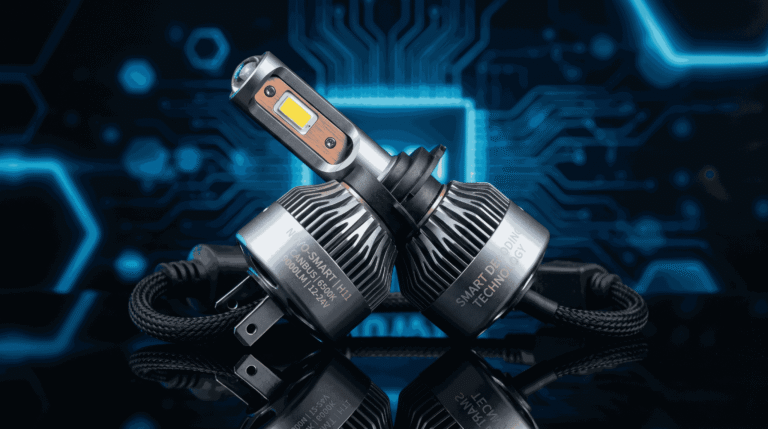
The H4 (P43t base) is one of the most widely recognized automotive headlight bulb types worldwide. Its defining feature is its dual-beam functionality. In a standard halogen H4, two filaments provide the low-beam and high-beam functions within a single bulb.
Because one bulb handles both lighting functions, H4 systems can provide a relatively compact lighting solution. This has contributed to their continued use in compact cars, motorcycles, commercial vehicles, and many older vehicle platforms.
Market Presence:
- Latin America & Asia: H4 remains widely used in many aftermarket markets, particularly among compact cars, motorcycles, commercial vehicles, and older vehicle platforms.
- Older Vehicle Generations: H4 is also found across older European and North American vehicles, although newer vehicle platforms increasingly use separate bulb systems, HID, or factory LED lighting.
For distributors targeting markets with strong H4 demand, LED replacements can offer customers a modern alternative to conventional halogen lighting. However, the LED bulb should maintain appropriate optical positioning and heat management to achieve a usable beam pattern.
If you are looking to source H4 LED replacements, check out our LED headlight H4 dual beam product range.
H7: Europe’s Single Beam Workhorse
Introduced in the early 1990s, the H7 (PX26d base) is a single-beam bulb. Unlike the H4, an H7 bulb provides only one beam function. A vehicle using separate H7 low- and high-beam applications therefore requires separate bulbs for those functions.
The H7 became particularly common in European vehicle platforms because its single-beam configuration allows lighting systems to use separate reflectors or projector optics for different beam functions.
Market Presence:
- Europe: H7 remains one of the most widely encountered halogen bulb standards in European vehicles, particularly across older and mid-generation vehicle fleets.
- Global Aftermarket: H7 is also widely encountered in aftermarket replacement and projector applications outside Europe.
Installation is an important consideration when sourcing H7 LED bulbs. H7 applications may use specialized metal retaining clips, plastic adapters, or vehicle-specific mounting systems.
For B2B buyers, this means that a universal H7 LED bulb may not provide the same installation experience across every vehicle. Correct adapter compatibility should therefore be verified before placing large-volume orders.
9005/9006: North American Pickup and SUV Favorites
If you are selling into the North American aftermarket, the 9005 (HB3) and 9006 (HB4) are important bulb bases to consider.
These bulb types are widely adopted in North American automotive applications under the ANSI HB designation system. Their twist-lock style bases and sealing O-rings differ from the retaining systems commonly associated with H4 and H7 bulbs.
- 9006 (HB4): Primarily associated with low-beam applications and also found in some fog-light applications.
- 9005 (HB3): Primarily associated with high-beam applications and designed for applications where higher light output is required.
Market Presence:
- North America: 9005 and 9006 are widely used across domestic trucks, SUVs, passenger vehicles, and North American-market Japanese vehicles. Applications vary significantly by model year and trim level.
- Fog Lights: 9006 and H11 are commonly encountered in fog-light applications, while 9005 is more commonly associated with high-beam applications.
For distributors, vehicle-specific fitment data is more reliable than assuming that every vehicle within a model family uses the same bulb base. For example, different generations or trims of the same vehicle may use different bulb technologies or base types.
To understand how upgrading these specific bases impacts overall driving visibility compared with legacy technologies, read our comprehensive LED vs halogen vs xenon comparison.
Regional Top-Selling Bulb Bases Data
For B2B buyers and wholesalers, stocking the right bulb bases requires an understanding of the local vehicle fleet. Consumer demand can vary significantly between regions because vehicle brands, model generations, import patterns, and replacement cycles differ.
The table below provides a market-oriented stocking reference, rather than a universal sales ranking:
| Region | Primary Bulb Focus | Secondary Focus | Typical Vehicle Applications |
| North America | 9005/9006, H11 | H13, 9007 | Ford F-Series, Chevrolet Silverado, Toyota Tacoma and other North American-market vehicles |
| Europe | H7, H1 | H4, H8/H9/H11 | VW Golf, BMW 3 Series, Audi A4, Peugeot 208 and other European-market platforms |
| Latin America | H4 | H7, H11 | Chevrolet Onix, VW Gol, Toyota Hilux and other regional vehicle platforms |
| Asia-Pacific | H4, H11 | 9005/9006, H7 | Honda City, Toyota Vios, Isuzu D-Max and other regional applications |
Actual demand should always be validated against vehicle registration data, local distributor sales history, and model-specific fitment information before establishing inventory ratios.
How Distributors Should Use This Data
For distributors and wholesalers, the most practical approach is to treat regional bulb popularity as a starting point rather than a fixed purchasing formula.
For example:
- A Latin American distributor may place greater emphasis on H4 while maintaining H7 and H11 as complementary inventory.
- A European distributor may prioritize H7 and H1 while maintaining selected H4 and H11 applications.
- A North American distributor may need a broader portfolio covering 9005, 9006, H11, H13, and 9007 depending on its customer base.
- A distributor serving mixed markets should prioritize actual order history and vehicle fitment data instead of relying solely on regional averages.
This approach helps reduce slow-moving inventory while improving the probability that the most requested bulb bases are available when customers need them.
To further optimize purchasing decisions, review our data on the top vehicles by replacement rate.
Pitfalls to Avoid: Dual vs Single Beam, Buckle Tolerances
When dealing with aftermarket automotive lighting, especially LED upgrades, several technical pitfalls can frustrate end-users and increase return rates. B2B buyers should evaluate both electrical compatibility and mechanical fitment before placing large-volume orders.
1. The Dual Beam vs. Single Beam Confusion
A common mistake among novice buyers is attempting to replace a dual-beam system, such as H4, with a single-beam bulb, such as H7, or vice versa.
- An H4 system uses three electrical connections to provide ground, low-beam, and high-beam functions.
- An H7 system is designed for a single beam function and normally uses two electrical connections.
They are fundamentally different in both physical design and electrical function. An H7 cannot simply replace an H4 without changing the vehicle’s lighting system.
Always verify the vehicle’s OEM bulb specification before purchasing or recommending an LED replacement.
2. Buckle Tolerances and O-Rings
The physical dimensions of the bulb base collar and locking features must remain within appropriate OEM fitment tolerances.
- H4 & H7: Incorrect collar dimensions or adapter geometry can prevent the retaining mechanism from locking securely into place.
- 9005 & 9006: These bulbs use a twist-lock mounting system and sealing O-ring. An incorrectly sized O-ring can make installation difficult or compromise the seal against moisture.
For B2B buyers, this is why mechanical fitment testing should be part of supplier evaluation. A bulb that meets its advertised lumen output but cannot be installed securely still creates warranty claims and customer returns.
3. CANbus and Electrical Draw
Some modern vehicles use bulb monitoring systems that can detect changes in electrical load. Because LED bulbs generally consume less power than equivalent halogen bulbs, the vehicle may interpret the lower load as a failed bulb or may produce flickering or warning messages.
This is particularly relevant when supplying LED upgrades for European vehicles and other modern platforms equipped with sensitive bulb monitoring systems.
For these applications, distributors should consider LED bulbs with appropriate CANbus compatibility or external load-management solutions where required. However, “CANbus ready” should not be treated as a universal guarantee. Compatibility should be tested against the actual vehicle application.
Frequently Asked Questions (FAQ)
Yes, H4, 9003, and HB2 are closely related bulb designations and generally refer to the same basic P43t physical bulb format.
However, North American applications can involve additional regulatory and performance requirements. Therefore, aftermarket LED compatibility should still be verified according to the specific vehicle and application.
When a vehicle specifies H4, 9003, or HB2, suppliers should confirm the exact application and beam requirements before recommending an aftermarket LED replacement.
No, not as a direct replacement, and modification is strongly discouraged.
While the two bulb bases look similar, their locking geometry and intended applications differ.
- Base Tabs: The locking tabs and indexing features are different, so a 9005 is not designed to directly lock into a 9006 socket.
- Beam Application: 9005 is primarily used for high-beam applications, while 9006 is commonly associated with low-beam applications. Using the wrong bulb can result in an incorrect optical pattern and excessive glare.
For distributors, the correct approach is to verify the OEM bulb number rather than recommending a visually similar replacement.
Far far away, behind the word mountains, far from the countries Vokalia and Consonantia, there live the blind texts. Separated they live in Bookmarksgrove right at the coast