3000K vs 4300K vs 6500K: Headlight Color Temperature and Buyer Preferences
For automotive aftermarket distributors and wholesalers, understanding headlight color temperature specifications goes far beyond comparing lumen output. One of the most important factors influencing consumer purchasing decisions is the visual color of the light.
Choosing the right headlight color temperature is not simply about selecting the “brightest” or “whitest” option. Different headlight color temperature options can influence product positioning, customer preferences, driving comfort, and suitability for specific applications.
Stocking the wrong headlight color temperature for your target market can lead to slower inventory turnover and unnecessary SKU complexity. This guide explains the characteristics, applications, and buyer considerations behind three of the most common automotive lighting options: 3000K, 4300K–5000K, and 6000K–6500K.
For B2B distributors, understanding headlight color temperature helps create a more targeted inventory strategy based on vehicle applications, customer preferences, and market demand.
1. What Is CCT? (Correlated Color Temperature)
Before making headlight color temperature procurement decisions, it is important to understand the measurement used to describe the visual color of automotive lighting.
Definition: What Is CCT?
CCT (Correlated Color Temperature) is a measurement used to describe the visual appearance or hue of light. It is measured in degrees Kelvin (K).
In automotive lighting:
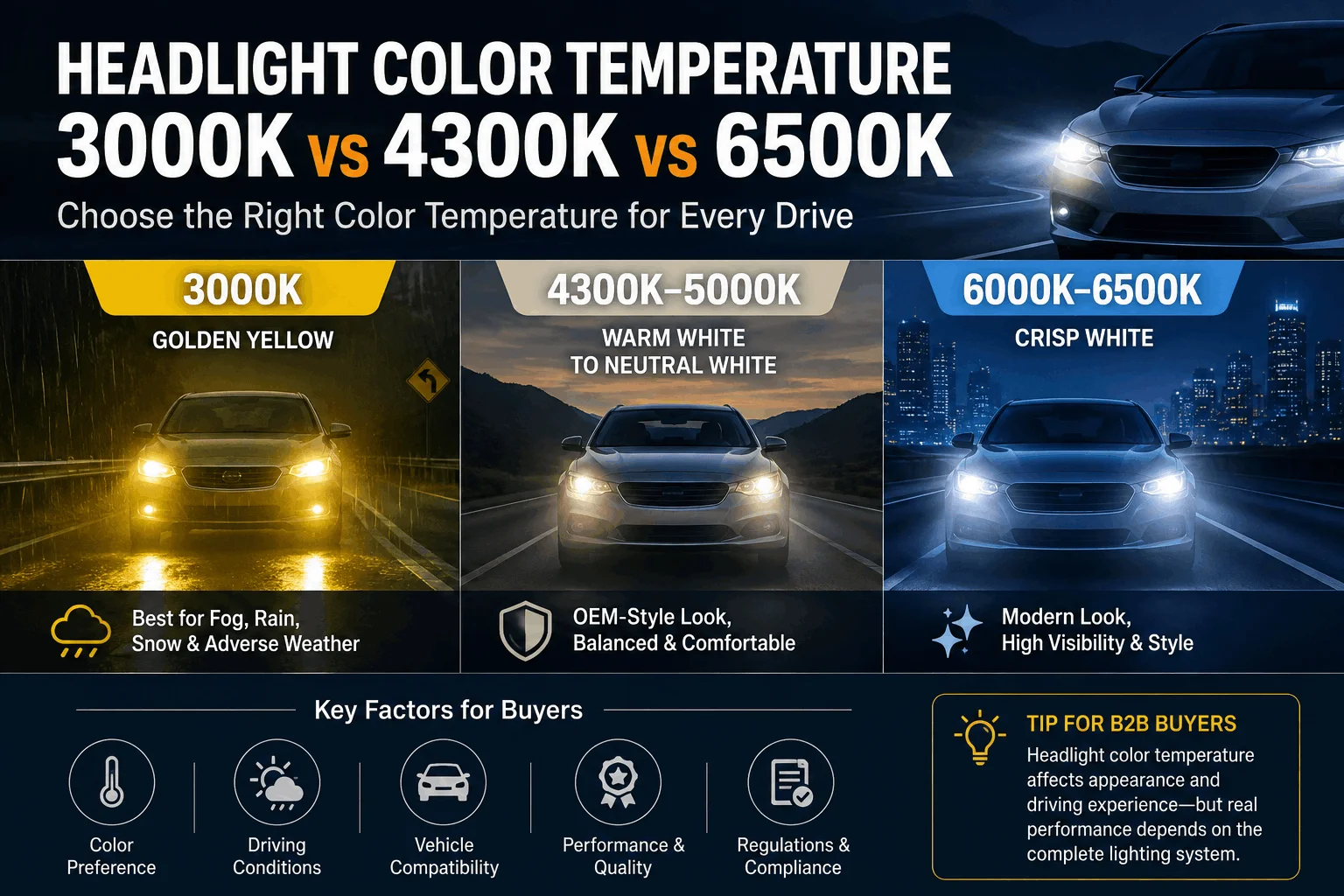
- Lower headlight color temperature values, such as 3000K, typically produce a warm yellow or golden-yellow appearance.
- Mid-range headlight color temperature values, such as 4300K–5000K, generally produce a warmer white to neutral white appearance.
- Higher headlight color temperature values, such as 6000K–6500K, generally produce a cooler, crisp white appearance that may have a slight blue tint.
Important: Headlight color temperature measures the appearance of light color. It does not directly measure heat generation, lumen output, or overall headlight performance.
For B2B buyers, understanding headlight color temperature is important because a higher Kelvin rating does not automatically mean a brighter product, while a lower Kelvin rating does not automatically mean weaker illumination.
When evaluating headlight color temperature, actual road performance should also be considered. LED design, optical compatibility, beam pattern, lumen output, and installation can all influence the final lighting result.
2. 3000K: Golden Yellow for Fog and Adverse Weather Applications
A 3000K headlight color temperature typically produces a distinct golden-yellow appearance. While this headlight color temperature is less commonly used for primary low-beam or high-beam applications, it remains a popular option for specific driving environments and aftermarket product categories.
For buyers comparing different headlight color temperature options, 3000K is generally positioned as a specialized lighting choice rather than a mainstream replacement for standard white headlights.
Why Do Drivers Choose This Headlight Color Temperature?
In rain, fog, snow, and other visually challenging conditions, drivers may experience increased reflections and glare from water droplets, wet road surfaces, and airborne moisture.
A 3000K headlight color temperature produces yellow or golden-yellow lighting that may help reduce the perception of reflected glare and provide a different level of visual contrast compared with cooler white light. For this reason, many drivers prefer this headlight color temperature for fog lamps and auxiliary lighting in adverse-weather environments.
Rather than viewing 3000K as a light that literally “cuts through” all rain or fog, B2B sellers should position this headlight color temperature as a specialized option for drivers who prefer yellow lighting in challenging weather conditions.
The suitability of a particular headlight color temperature can depend on driving conditions, customer preference, vehicle application, and the overall lighting system.
Best B2B Sales Applications
- Primary Use: Dedicated fog lights and selected off-road or auxiliary lighting applications.
- Target Customers: Off-road enthusiasts, commercial vehicle operators, and drivers in regions with frequent rain, fog, snow, or mountain roads.
- Product Positioning: Adverse-weather visibility preference, auxiliary lighting, and dual-color lighting systems.
For distributors, a 3000K headlight color temperature can work particularly well as a complementary SKU rather than a replacement for mainstream white headlight inventory.
Adding this headlight color temperature to a broader product portfolio can help distributors serve customers with more specialized weather-related or auxiliary lighting requirements.
3. 4300K–5000K: The OEM-Style Headlight Color Temperature Balance
The 4300K–5000K headlight color temperature range generally provides a warmer white to neutral white appearance. This headlight color temperature range is often associated with OEM-style lighting preferences, particularly in traditional HID applications and replacement products designed to maintain a more factory-oriented appearance.
Although individual vehicle lighting systems vary, a 4300K headlight color temperature is commonly associated with a warmer OEM-style HID appearance, while a 5000K headlight color temperature moves closer toward a neutral white appearance.
The “Do-It-All” Headlight Color Temperature Range
For buyers who prioritize a factory-style appearance over an aggressive aftermarket look, this headlight color temperature range can provide a balanced visual option.
Compared with cooler white or blue-tinted lighting, the 4300K–5000K headlight color temperature range is often positioned as more conservative and OEM-oriented. It may appeal to customers who want to replace or upgrade lighting while maintaining a relatively traditional appearance.
However, distributors should avoid assuming that every OEM vehicle uses the same headlight color temperature. Actual factory specifications vary by manufacturer, vehicle generation, lighting technology, and market.
Understanding the customer’s preferred headlight color temperature can therefore be useful when recommending OEM-style replacement products.
Best B2B Sales Applications
- Primary Use: OEM-style replacement products and factory-appearance upgrades.
- Target Customers: Conservative drivers, replacement-parts buyers, restoration customers, and customers who prefer a less aggressive aftermarket appearance.
- Product Positioning: OEM-style appearance, balanced white light, and practical daily driving.
For distributors, the 4300K–5000K headlight color temperature category can help fill the gap between specialized yellow lighting and cooler white aftermarket products.
For an in-depth comparison of different automotive lighting technologies, see our LED vs Halogen vs Xenon Comparison.
4. 6000K–6500K: Crisp White and the Aftermarket Favorite
In the automotive LED aftermarket, the 6000K–6500K headlight color temperature range is one of the most popular options, particularly in markets where consumers value a modern white appearance and aesthetic upgrades.
This headlight color temperature range typically produces a crisp white appearance and, depending on the product design, may include a subtle cool or blue-toned appearance.
Many consumers associate this headlight color temperature with newer vehicle designs and modern LED lighting systems. As a result, upgrading to a 6000K or 6500K headlight color temperature can give older vehicles a more contemporary visual appearance.
Why Is This Headlight Color Temperature Range Popular?
The popularity of the 6000K–6500K headlight color temperature range is primarily driven by consumer preference for a clean, modern white appearance.
In clear and dry driving conditions, some drivers also prefer the visual contrast and perceived brightness associated with this headlight color temperature range. However, actual road illumination depends on the complete lighting system rather than headlight color temperature alone.
A 6500K headlight color temperature is not automatically brighter than a 4300K option simply because it has a higher Kelvin rating. LED chip quality, power consumption, thermal management, optical design, and beam pattern all influence real-world performance.
When comparing products, distributors should therefore evaluate headlight color temperature together with other technical specifications rather than treating Kelvin ratings as a direct measurement of brightness.
Best B2B Sales Applications
- Primary Use: Main headlights, low-beam and high-beam upgrades, and aesthetic-focused aftermarket products.
- Target Customers: Car enthusiasts, modification customers, and drivers seeking a modern white-light appearance.
- Product Positioning: Modern appearance, LED upgrades, and mainstream aftermarket demand.
For many distributors, the 6000K–6500K headlight color temperature range can serve as a core inventory category, while 3000K and OEM-style headlight color temperature options provide additional choices for more specialized customer segments.
5. Regional Headlight Color Temperature Preferences and Market Tendencies
Consumer preferences for headlight color temperature can vary depending on vehicle culture, climate, local regulations, product availability, and aftermarket trends.
For distributors and wholesalers, regional headlight color temperature inventory planning should therefore be based on actual customer demand, local vehicle fleets, regulatory requirements, and competitor offerings rather than relying exclusively on global assumptions.
Different regions may show different preferences for headlight color temperature, but these preferences should be validated through local sales data and customer feedback whenever possible.
General B2B Headlight Color Temperature Market Tendencies by Region
| Region / Market | Typical Driving Conditions | Common Market Preferences | B2B Inventory Considerations |
|---|---|---|---|
| Latin America (e.g., Colombia, Brazil) | Diverse urban, rural, mountainous, and rainy environments | Strong interest in white LED upgrades, with demand for yellow auxiliary and fog lighting in some regions | Maintain a balanced headlight color temperature inventory with popular white LED products and selected 3000K fog or auxiliary lighting based on local demand |
| North America | Highly varied by region and climate | Strong aftermarket demand for LED upgrades across trucks, SUVs, and passenger vehicles | Focus on vehicle fitment, beam performance, and popular headlight color temperature options while considering specialized SKUs for regional weather conditions |
| Europe | Moderate to rainy conditions depending on country | Strong demand for OEM-style replacements and compliant lighting products | Prioritize applicable product approvals, compatibility, beam performance, and market-specific compliance requirements rather than selecting inventory based on headlight color temperature alone |
| Southeast Asia | High humidity, frequent rain, and monsoon conditions | Demand for modern white lighting alongside growing interest in specialized weather-oriented products | Consider maintaining mainstream white headlight color temperature products alongside selected yellow or dual-color options where local demand supports them |
The key takeaway for B2B buyers is that headlight color temperature should not be treated as the only inventory decision factor.
Before placing large-volume orders for different headlight color temperature options, distributors should also evaluate:
- Local vehicle models and bulb bases
- Customer preferences for headlight color temperature
- Weather conditions
- Local lighting regulations
- Existing competitor product ranges
- Demand for OEM-style versus aesthetic upgrades
A successful headlight color temperature inventory strategy should balance mainstream demand with specialized market opportunities.
6. Headlight Color Temperature × Scenario Matching Table
To help sales teams and distributors recommend a more suitable headlight color temperature, the following matrix combines color temperature, typical applications, and commonly available bulb bases.
It is important to note that headlight color temperature does not determine bulb base compatibility. The same bulb base may be available in multiple headlight color temperature options depending on the manufacturer and product design.
For physical fitment information, cross-reference this guide with our H4 vs H7 vs 9005 vs 9006 Bulb Base Guide.
| Headlight Color Temperature | Visual Appearance | Typical Driving or Product Application | Common Compatible Bases |
|---|---|---|---|
| 3000K | Golden Yellow | Fog lights, auxiliary lighting, and adverse-weather-oriented applications | H11, H3, 9006, 880 and other application-specific bases |
| 4300K–5000K | Warm White to Neutral White | OEM-style replacement and balanced daily-driving products | H4, H7, D2S and other vehicle-specific bases |
| 6000K–6500K | Crisp / Cool White | Main headlight upgrades and aesthetic-focused aftermarket applications | 9005, H4, H7, H11 and other common headlight bases |
| Dual-Color LEDs | White + Yellow | Changing weather conditions and multifunction aftermarket applications | H4, H11, 9005, 9006 and product-specific options |
When recommending the right headlight color temperature, sales teams should first confirm:
- The vehicle’s original bulb base or lighting system.
- Whether the customer is replacing an existing bulb or upgrading the lighting system.
- The customer’s preferred headlight color temperature and visual appearance.
- Typical driving conditions.
- Applicable local regulations and installation requirements.
Selecting the right headlight color temperature should therefore be part of a broader product recommendation process rather than an isolated purchasing decision.
Frequently Asked Questions (FAQ)
The legality of a 6500K headlight color temperature depends on the country, region, vehicle type, lighting system, and applicable regulations.
Headlight color temperature alone does not determine whether a headlight is legal for road use. Regulatory compliance may also depend on factors such as:
- Beam pattern
- Cutoff performance
- Headlamp housing compatibility
- Product certification or approval
- Light output
- Glare control
- Local regulations governing LED retrofit products
A properly engineered and approved lighting product may meet applicable requirements, while an incompatible retrofit bulb may not, regardless of headlight color temperature.
Before importing or selling products with a particular headlight color temperature, distributors should always check the applicable lighting regulations and product approval requirements in their target market.
No. This is one of the most common misconceptions in automotive lighting.
Headlight color temperature measured in Kelvin (K) describes the visual color of light, while lumens are used to measure light output.
A higher headlight color temperature does not automatically mean higher lumen output or better road illumination. Actual performance depends on the entire lighting system, including LED chip efficiency, electrical design, heat management, optical compatibility, and beam pattern.
Some consumers may perceive a cooler headlight color temperature as brighter because of its appearance and contrast under certain conditions. However, perceived brightness and actual measured light output are not the same thing.
For B2B buyers, the best approach is to evaluate headlight color temperature using a combination of:
- Headlight color temperature
- Actual power consumption
- Measured light output
- Beam pattern
- Thermal management
- Product lifespan
- Vehicle compatibility
- Regulatory compliance
Avoid unnecessary inventory mismatches by offering headlight color temperature options that match your target customers, vehicle applications, and market requirements.
A balanced headlight color temperature inventory may include:
- 3000K headlight color temperature options for selected fog and auxiliary lighting applications
- 4300K–5000K headlight color temperature options for OEM-style and conservative replacement markets
- 6000K–6500K headlight color temperature options for mainstream modern LED upgrades
- Dual-color products for customers who want additional flexibility
The most effective headlight color temperature inventory strategy is not simply to stock the highest Kelvin rating available. Instead, choose products based on vehicle fitment, customer preference, driving conditions, product performance, headlight color temperature, and local compliance requirements.
Explore our LED headlight product range by headlight color temperature and bulb base, and contact us for a B2B wholesale quotation tailored to your market.