Bi-LED Projector Lenses vs LED Bulbs: Which Retrofit Wins?
The debate between installing drop-in LED bulbs and retrofitting a complete Bi-LED projector assembly continues to shape the automotive lighting aftermarket.
While LED bulbs replace only the light source inside an existing headlamp housing, a Bi-LED projector retrofit introduces a new optical system designed to control and distribute light through its own reflector, cutoff mechanism, and projection lens.
Neither upgrade is automatically the right choice for every vehicle. The better solution depends on the compatibility of the factory optics, the condition of the existing headlamp, installation budget, desired performance, and the level of modification the vehicle owner or workshop is prepared to undertake.
Two Retrofit Routes: Bi-LED Projector Lenses vs. LED Bulbs
Upgrading nighttime visibility begins with understanding the fundamental difference between replacing a light source and redesigning the optical system that controls that light.
The Drop-In LED Bulb
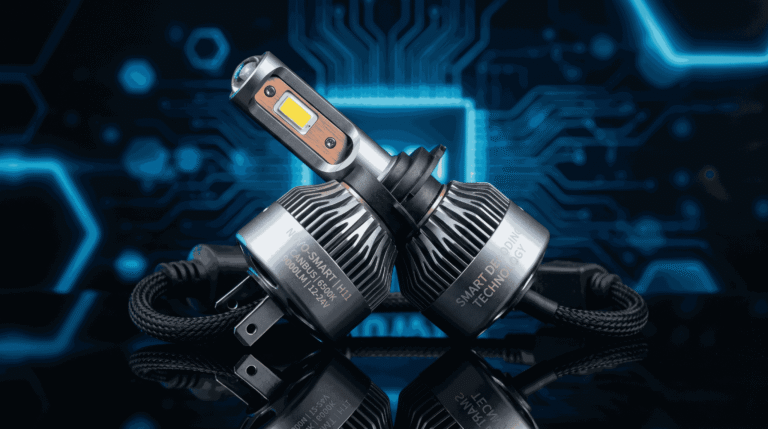
An aftermarket LED bulb is designed to replace a traditional halogen bulb while fitting into the vehicle’s existing headlamp housing. Most designs use an aluminum or copper-based thermal structure, CSP or COB-style LED emitters, and either an active cooling fan or passive heat dissipation system.
Optics Reliance: The LED bulb depends heavily on the factory projector or reflector housing to shape, aim, and distribute the light.
Emitter Geometry: Halogen bulbs produce light from a filament with a specific size and position. LED emitters have a different physical geometry, so bulb design and chip placement must closely match the original focal position to achieve an acceptable beam pattern.
Performance Variation: A properly engineered LED bulb may perform well in some compatible factory projector or reflector housings. However, a poorly matched LED replacement can create excessive foreground brightness, scattered light, weak distance illumination, or increased glare.
The Bi-LED Projector Lens
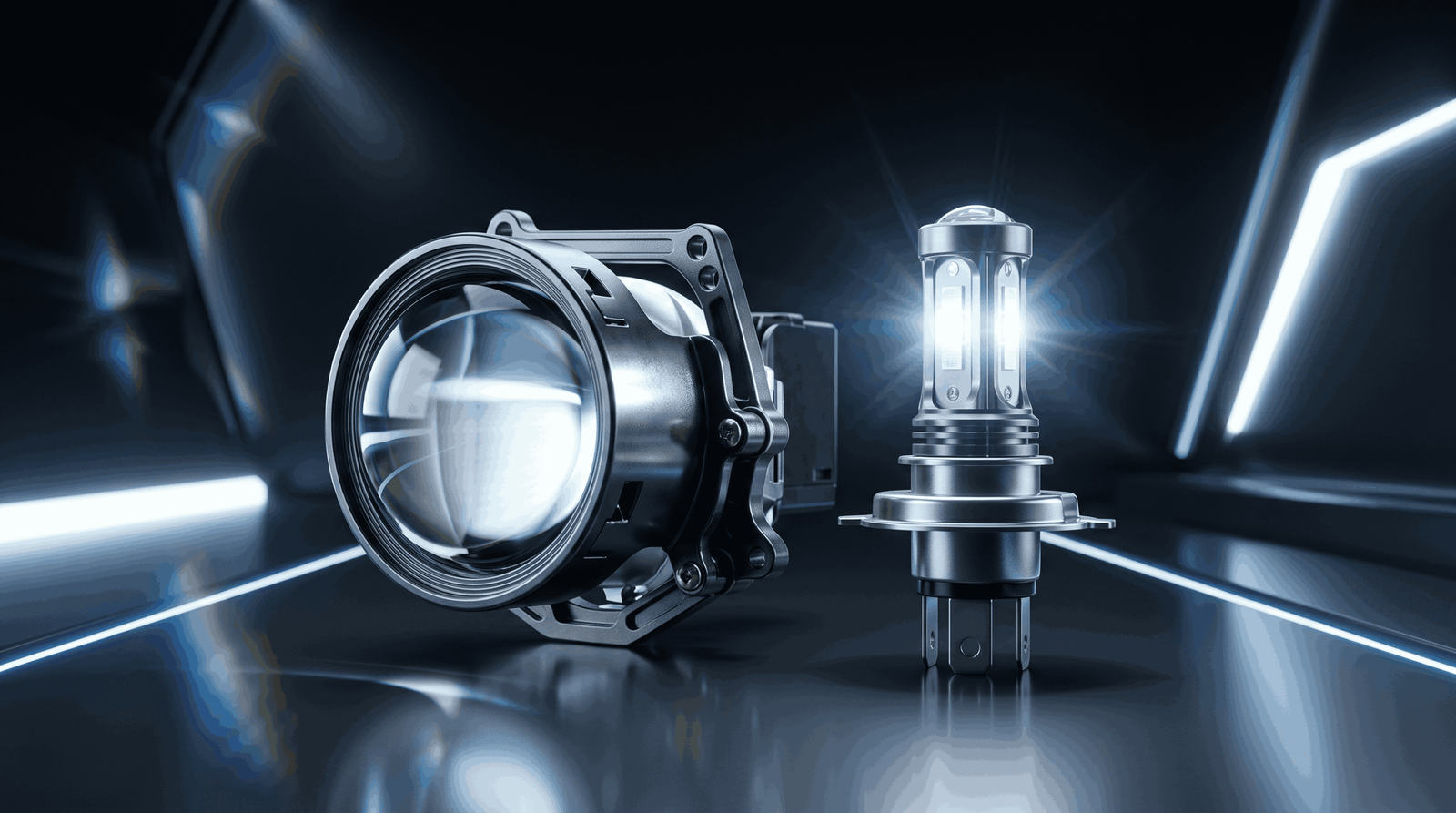
A Bi-LED projector is a self-contained optical unit that integrates the LED light source, reflector system, projection lens, cooling structure, and high/low beam mechanism into one assembly.
“Bi-LED” generally refers to a projector capable of producing both low beam and high beam functions from the same projector unit.
Anatomy of a Bi-LED Projector: A typical Bi-LED projector contains a reflector bowl, integrated LED emitters, a cutoff shield or shutter mechanism, a projection lens, heat sink, and cooling system.
The Solenoid Mechanism: In many Bi-LED projector designs, the low beam pattern is created by a physical shield that blocks part of the light output. When the high beam is activated, a solenoid moves the shield to allow additional light to project forward.
Optical Independence: Because the projector contains its own internal reflector and projection lens, its beam pattern is less dependent on the original reflector geometry than a drop-in LED bulb. However, the final result still depends on correct mounting, alignment, aiming, and integration into the headlamp assembly.
Optical Output, Cutoff Lines, and Photometrics
The most important measurement for a lighting upgrade is not simply advertised lumen output. Usable illumination on the road, beam distribution, distance, foreground control, and glare management are more meaningful indicators of real-world performance.
A high-quality Bi-LED projector can provide greater control over the optical system because the light source, reflector, cutoff mechanism, and projection lens are engineered as an integrated unit.
However, a premium LED bulb installed in a compatible factory housing can also produce a useful and well-controlled beam pattern.
Photometric Performance Comparison
| Performance Metric | Premium LED Bulb in a Compatible Factory Housing | Premium 3-Inch Bi-LED Projector Retrofit |
|---|---|---|
| Center Peak Intensity | Moderate to high, depending on bulb and housing compatibility | Typically high when properly designed and aligned |
| Beam Width | Dependent on factory optics | Can offer a wide and controlled distribution depending on projector design |
| Cutoff Line Sharpness | Can range from acceptable to excellent in compatible projector optics | Typically sharp and well-defined when correctly installed |
| Foreground Illumination | Can be uneven if the LED emitter does not match the original optical focal point | Designed for controlled and balanced light distribution |
| High Beam Performance | Dependent on the factory high-beam optical system | Can provide strong distance performance through an integrated optical design |
| Color Uniformity | Dependent on LED chip design and factory optics | Generally consistent when using a well-designed projector optical system |
Beam Control and the Cutoff Shield
When an LED bulb is installed in a reflector housing that was not designed to work effectively with its emitter geometry, the directional output may not interact with the reflector in the same way as the original halogen filament.
This can create hot spots, uneven beam distribution, excessive foreground illumination, or unwanted upward light.
A Bi-LED projector uses an integrated optical system and cutoff mechanism to control how light is distributed. A well-designed projector can significantly reduce stray light above the intended cutoff area and create a more defined beam boundary.
However, the final beam pattern still depends on projector quality, mounting position, rotational alignment, headlamp design, and proper aiming.
Installation Difficulty, Labor, and Cost Breakdown
Choosing between an LED bulb and a Bi-LED projector retrofit is often determined by the available budget, installation capability, desired performance, and whether the vehicle owner wants a reversible upgrade or a more comprehensive optical modification.
Economic and Labor Analysis
| Upgrade Metric | Drop-In LED Bulbs | Bi-LED Projector Retrofit |
|---|---|---|
| Hardware Cost | Generally lower | Generally higher due to the complete projector assembly and additional components |
| Labor Cost | Low to moderate | High, depending on headlamp design and retrofit complexity |
| Installation Time | Typically minutes to approximately one hour | Several hours or longer for a traditional custom retrofit |
| Skill Level Required | Beginner to intermediate | Intermediate to expert, depending on the installation method |
| Reversibility | Often reversible | May require permanent modification to the original headlamp |
| Service Life | Dependent on LED chips, driver quality, cooling design, and operating conditions | Dependent on LED, driver, cooling system, and thermal design |
The Bi-LED Projector Retrofit Process
A traditional Bi-LED projector retrofit is significantly more complex than replacing a bulb. Depending on the headlamp design and retrofit system, the installation process may involve opening the headlamp assembly and modifying the internal mounting structure.
- Headlight Removal: The bumper or other vehicle components may need to be removed to access the headlamp assemblies.
- Opening the Assemblies: Depending on the sealant and housing design, controlled heating may be used to soften the factory sealant and separate the front lens from the rear housing.
- Lens Separation: The front lens is carefully separated from the housing to access the internal optical components.
- Hardware Modification: Depending on the retrofit design, the original reflector or mounting structure may require modification to install and secure the Bi-LED projector.
- Rotational Alignment: The projector must be positioned accurately to ensure the cutoff line is level. Improper rotational alignment can result in an uneven or slanted beam pattern.
- High-Beam Wiring: Depending on the projector design, the high-beam solenoid or control wire may need to be connected to the vehicle’s existing high-beam circuit.
- Resealing: The headlamp must be resealed carefully to reduce the risk of moisture and condensation entering the housing.
Best Vehicles for Each Upgrade Path
Not every vehicle requires a complete Bi-LED projector retrofit. The first step is to evaluate the existing optical system, the condition of the headlamp, and the desired performance level.
Ideal Candidates for LED Bulbs
Drop-in LED bulbs can be an effective solution when the factory headlamp optics are compatible with the LED bulb’s emitter design.
Vehicles with halogen projector housings may be particularly suitable when testing confirms that the replacement bulb maintains an acceptable cutoff and beam pattern.
LED bulbs are generally a practical option for drivers or workshops looking for:
- A lower-cost lighting upgrade
- A relatively simple installation process
- A reversible modification
- An improvement over halogen output without opening the headlamp assembly
- A solution that works with an optically compatible factory housing
Ideal Candidates for Bi-LED Projector Retrofits
A complete Bi-LED projector retrofit may be the better solution when the existing optical system cannot provide the desired beam control or when a full redesign of the headlamp’s internal lighting system is required.
Reflector Housings With Poor LED Compatibility: Some reflector designs may not produce an acceptable beam pattern when fitted with LED replacement bulbs. In these cases, a properly engineered Bi-LED projector retrofit can provide greater control over the optical system.
Burned or Degraded Factory Projectors: Over time, the reflective surfaces inside factory projector units may degrade because of heat, age, or long-term use. When the original projector optics are damaged, simply replacing the bulb may not restore the original beam performance. Replacing the degraded optical unit with a new projector may be a more effective solution.
Performance-Focused Builds: Drivers and workshops seeking stronger beam control, improved distance performance, or a complete optical redesign may prefer a Bi-LED projector retrofit.
Custom Headlamp Projects: Vehicles undergoing cosmetic or structural headlamp modifications may benefit from installing a Bi-LED projector while the headlamp assembly is already being opened.
Legal Compliance, Glare Management, and Thermal Efficiency
Automotive lighting regulations and standards can place limits on beam intensity, light distribution, glare, and other photometric characteristics. The specific requirements vary by market and depend on the applicable regulatory framework.
Navigating Compliance
A drop-in LED bulb that performs poorly with the original reflector or projector optics may produce an unacceptable beam pattern or excessive upward light.
For this reason, compatibility testing and correct aiming are important when upgrading from halogen to LED technology.
A well-designed Bi-LED projector can provide a more controlled optical foundation because its LED source, reflector, cutoff mechanism, and projection lens are engineered as an integrated system.
However, the compliance status of a completed retrofit depends on the entire headlamp assembly, the installation method, beam performance, and the applicable testing or certification requirements.
In other words, installing a projector that is marketed as high quality does not automatically make the completed retrofit DOT or ECE compliant.
Workshops and buyers should evaluate the applicable regulations for their target market and confirm compliance requirements for the complete lighting system.
Thermal Management: Why Bi-LED Projectors Can Offer Advantages
Heat management is one of the most important factors affecting LED performance and long-term reliability. As LED junction temperatures increase, luminous output and efficiency can decline.
LED Bulbs: Because a replacement LED bulb must fit within the limited space available behind the headlamp, its cooling system may have less surface area than a larger integrated lighting assembly. Performance and service life depend heavily on the quality of the heat sink, fan, driver, and thermal interface.
Bi-LED Projectors: A Bi-LED projector typically has a larger physical structure and may integrate a substantial aluminum heat sink and active cooling system. This additional thermal capacity can improve heat management and support stable operation, particularly in high-output designs.
However, service life depends on the complete system. LED chip quality, driver design, fan reliability, thermal materials, operating temperature, and duty cycle all influence long-term durability.
The Shift Toward OEM Integration and Advanced Optics
The automotive industry is gradually moving away from traditional replaceable bulbs in many vehicle segments.
Advanced LED headlamp systems increasingly integrate the light source and optics into a single assembly, allowing manufacturers to achieve more precise beam control and support technologies such as Matrix LED and Adaptive Driving Beam systems.
While advanced OEM ADB systems are closely integrated with vehicle electronics, cameras, sensors, and control software, the aftermarket is also developing more advanced projector technologies.
Modern Bi-LED projectors may incorporate multi-LED architectures, improved optical surfaces, enhanced thermal systems, and more sophisticated beam designs.
A Bi-LED retrofit cannot fully replicate every function of an OEM adaptive lighting system, but it can provide an opportunity to significantly modernize the optical performance of an older headlamp when the retrofit is properly engineered and installed.
Frequently Asked Questions (FAQ)
In many traditional Bi-LED projector retrofit applications, yes.
The headlamp assembly may need to be removed and opened to access the internal mounting structure. Depending on the vehicle and projector design, mechanical modification, alignment, wiring, and resealing may also be required.
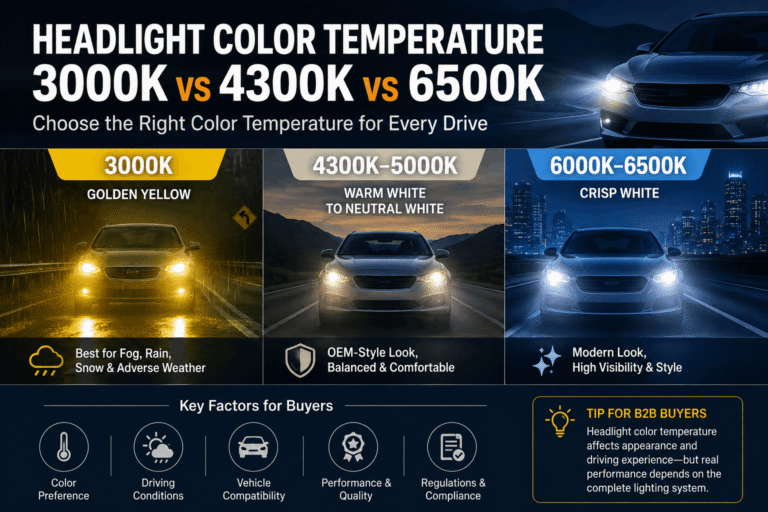
Performance in rain or fog depends on several factors, including beam pattern, light intensity, color temperature, road conditions, and optical control.
A well-designed Bi-LED projector can provide controlled forward illumination, but excessive intensity or an unsuitable color temperature may increase reflections, glare, or backscatter in certain weather conditions.
Beam control is often as important as raw brightness.
It depends on the retrofit method.
Some installations may use mounting methods that allow partial reversibility, while others require cutting, drilling, or permanent modification to the factory reflector or internal mounting structure.
A traditional custom retrofit should generally be considered a potentially irreversible modification unless the specific installation method is designed to be reversible.
Modern Bi-LED projectors offer several practical advantages over traditional Bi-Xenon HID systems, including instant illumination, simplified electrical architecture, and the potential for improved energy efficiency.
However, actual beam width, intensity, uniformity, and overall performance depend on the specific projector design and implementation.
A high-quality projector should be evaluated based on measured optical performance rather than technology alone.