7 Red Flags in Headlight Supplier Quotes: A Buyer’s Survival Guide
Sourcing automotive headlights from overseas suppliers can create excellent opportunities for auto parts distributors, wholesalers, and aftermarket retailers. However, the global automotive lighting supply chain also contains hidden risks. A quotation that appears extremely competitive may hide problems related to product quality, compliance, production capability, or long-term supply reliability.
For professional buyers, a headlight supplier quote is not simply a price list. It is the first document that reveals whether a supplier is transparent, technically capable, and prepared to support your business.
Before placing a bulk order, you need to carefully evaluate more than just the unit price. Product specifications, testing data, certification documents, payment terms, production capability, and warranty policies all provide important clues.
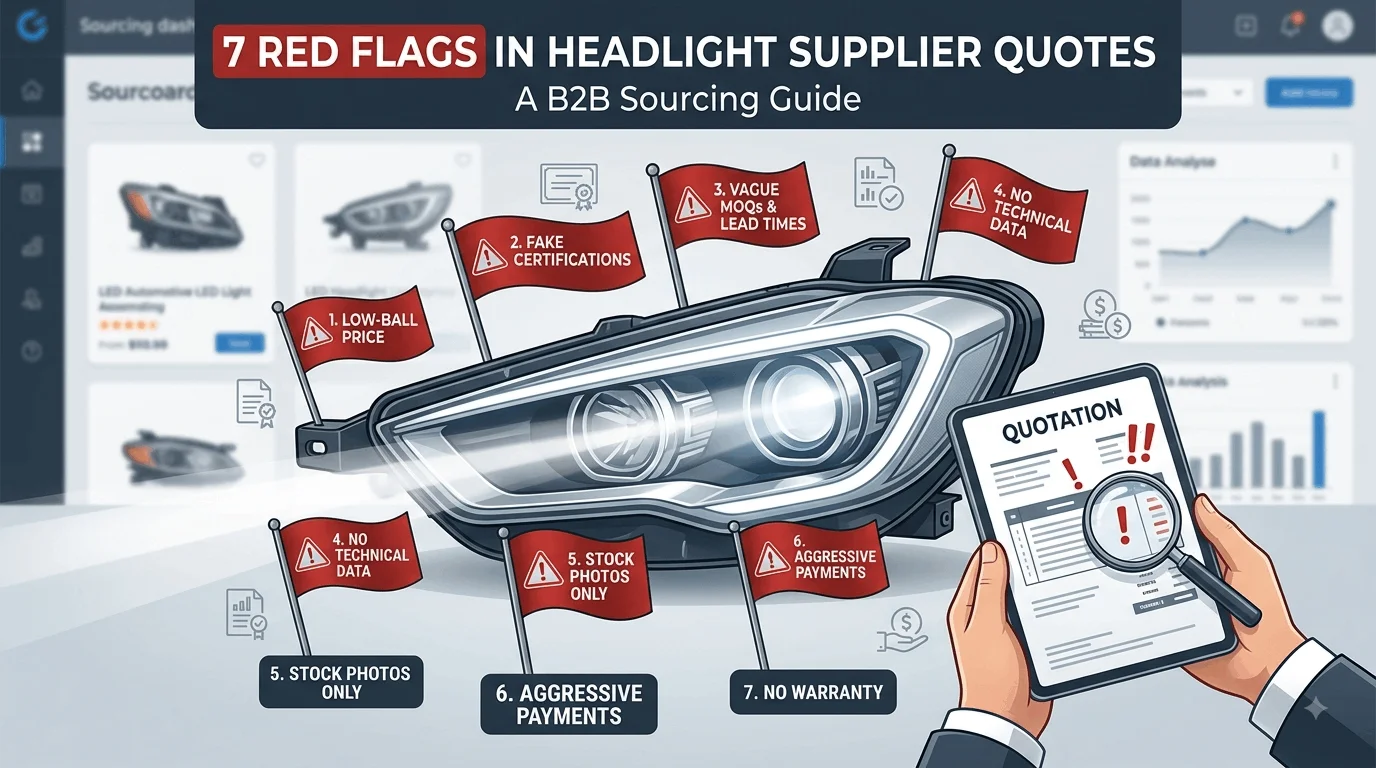
Below are the 7 critical red flags in headlight supplier quotes that every automotive lighting buyer should understand, along with practical ways to reduce sourcing risks.
1. Quotes Far Below the Market Average
In the automotive lighting industry, extremely low prices often indicate that a supplier has reduced costs somewhere in the production process. While competitive pricing is important, a quotation that is significantly below the typical market range should always be investigated carefully.
For example, if an LED headlight supplier offers pricing 30%-50% lower than comparable products with similar specifications, buyers should verify whether the difference comes from genuine cost advantages or from reduced component quality.
Low-cost suppliers may use lower-grade materials such as:
- Less efficient LED chips with unstable light output
- Poor thermal management solutions
- Basic drivers without proper protection functions
- Lower-quality housing materials
These shortcuts may reduce the initial purchase price but can increase customer complaints, return rates, and brand damage after the products reach the market.
Cost Structure Comparison: Standard vs. Suspicious Quotations
| Component | Typical Quality Difference | Potential Risk |
|---|---|---|
| LED Chips | Automotive-grade CSP chips vs. low-cost alternatives | Poor beam performance and faster brightness decline |
| Heat Dissipation System | Aluminum cooling design vs. low-quality materials | Overheating and shortened product lifespan |
| Driver System | Intelligent temperature control drivers vs. basic circuits | Flickering, CANBUS errors, and unstable performance |
| Quality Control | Full testing process vs. limited inspection | Higher defect rates after shipment |
A reliable LED headlight supplier should be able to explain how product performance is achieved, rather than competing only through the lowest quotation.
Actionable Advice:
Request detailed product specifications, component information, and quality inspection procedures before accepting a quotation. A professional supplier should be able to explain the value behind the price.
2. Unverifiable or Generic Certifications
Compliance is a critical factor when importing automotive lighting products. Selling non-compliant headlights in regulated markets can result in customs issues, customer complaints, product recalls, or legal risks.
A major warning sign is when a supplier claims:
- “DOT Approved”
- “CE Certified”
- “E-Mark Approved”
but cannot provide supporting documentation.
For example, for the US market, buyers should pay attention to whether products meet relevant requirements such as FMVSS 108 compliance, rather than simply accepting the phrase “DOT Approved.”
For European markets, E-Mark documentation should match the actual product model and supplier information.
How to Identify Certification Problems
Missing Test Reports
A certificate alone is not enough. Reliable suppliers should provide supporting documents such as:
- Laboratory test reports
- Product model information
- Testing standards
- Issuing organization details
Company Information Mismatch
Check whether:
- The company name on certificates matches the supplier quotation
- The product model matches the quoted item
- The certificate applies to the actual product being purchased
Outdated Quality Management Certificates
For factory verification, buyers should check whether certifications such as:
- ISO9001
- IATF 16949 (for automotive-related manufacturing systems)
are valid and relevant.
Actionable Advice:
Never rely only on a logo or certificate image inside a quotation. Always request official documentation and verify whether it belongs to the actual supplier.
3. Missing Photometric or Luminous Performance Data
A professional automotive lighting supplier sells measurable lighting performance, not just a product appearance.
One of the most common problems in LED headlight sourcing is exaggerated brightness claims. Some suppliers advertise extremely high lumen numbers without explaining whether the value represents:
- Theoretical LED output
- Combined output of multiple chips
- Actual measured output after thermal losses
A trustworthy headlight supplier quote should include technical information that proves actual performance.
Technical Data Buyers Should Request
| Specification | Red Flag | Professional Standard |
|---|---|---|
| Lumens | Extremely high numbers without test data | Measured effective lumen output |
| Lux Performance | No beam measurement provided | Photometric testing data |
| Beam Pattern | “360-degree lighting” without validation | Clear cutoff and beam distribution images |
| Thermal Testing | No temperature information | Heat management verification |
For example, a quality LED headlight supplier should be able to provide:
- Integrating sphere test results
- Beam pattern images
- Center illumination data
- Temperature testing records
These documents help buyers evaluate whether the product will provide safe and consistent lighting performance.
Actionable Advice:
Do not judge an LED headlight only by advertised lumen numbers. Always evaluate beam pattern, thermal design, and real-world lighting performance.
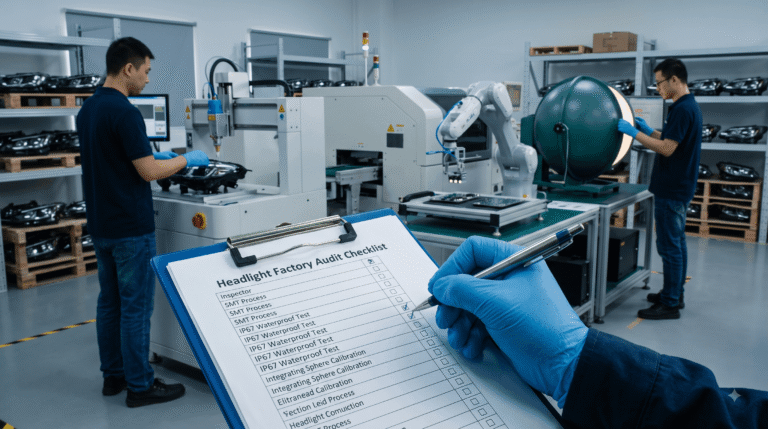
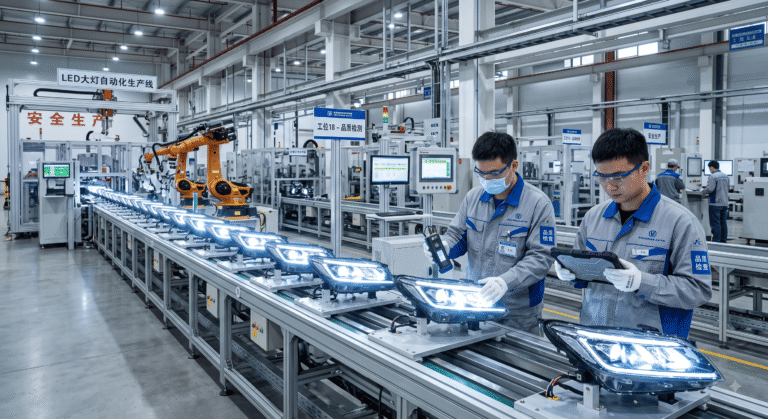
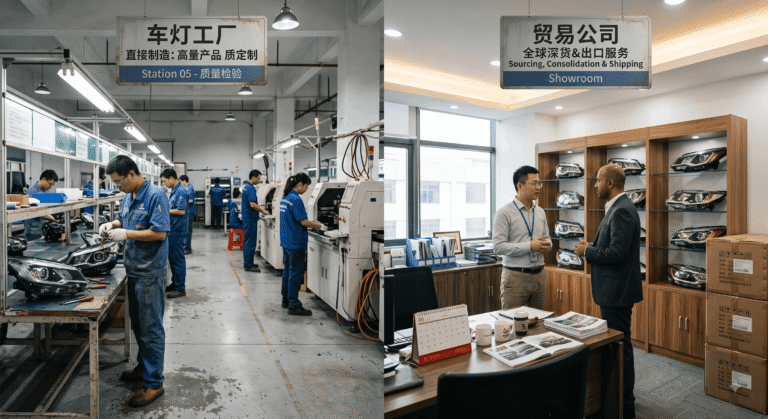
4. Stock Photos and No Real Factory Pictures
A supplier’s visual information can reveal a lot about their actual production capability.
When reviewing a quotation or supplier profile, be cautious if you only see:
- Professional product renderings
- Reused marketing images
- Generic factory photos
- No evidence of actual production activities
This does not automatically mean the supplier is unreliable, but it does mean additional verification is necessary.
Some trading companies provide excellent sourcing services, while some manufacturers may have limited export experience. The key factor is not simply whether a company is a factory or trading company, but whether they can provide transparent technical information, quality control records, and reliable supply support.
What Professional Buyers Should Request
Before placing a large order, ask for:
- Recent factory videos showing production areas
- Assembly line photos
- Raw material storage information
- Testing equipment images
- Quality inspection procedures
Important equipment may include:
- Integrating sphere testing systems
- High and low-temperature testing chambers
- Vibration testing equipment
A reliable supplier should be comfortable showing how products are manufactured and tested.
Actionable Advice:
Use factory verification as part of your supplier evaluation process. Combine quotation review, technical documentation, and production verification before making purchasing decisions.
5. Vague MOQ or Ambiguous Lead Times
A professional quotation should provide clear information about production requirements and delivery expectations.
The Minimum Order Quantity (MOQ) and lead time are not just commercial details. They reflect whether a supplier has organized production processes, stable supply chains, and realistic manufacturing capabilities.
A warning sign appears when a supplier quote includes unclear statements such as:
- “MOQ negotiable”
- “Production time: 1-30 days”
- “Delivery depends on availability”
- “Sample and bulk orders have the same production schedule”
These vague terms may indicate that the supplier does not have a clear production plan or may not control the manufacturing process directly.
However, MOQ flexibility itself is not always a problem. Many reliable LED headlight suppliers support trial orders for new customers. The key is whether the supplier can clearly explain:
- Production capacity
- Material preparation time
- Sample process
- Mass production schedule
What a Professional Quotation Should Include
| Item | Professional Standard | Warning Sign |
|---|---|---|
| MOQ | Clearly defined by model or customization level | No specific MOQ information |
| Sample Order | Available with clear pricing and timeline | Refuses testing orders |
| Lead Time | Specific production schedule | Uncertain delivery promises |
| Production Capacity | Explained based on actual factory capability | Cannot provide capacity information |
A reliable supplier understands that new buyers need to test products before committing to large volumes. Offering samples and transparent production information demonstrates confidence.
Actionable Advice:
Before placing a bulk order, start with a controlled trial order. Verify product quality, packaging, delivery performance, and customer feedback before scaling up.
6. No Formal Contract or Aggressive Payment Terms
Financial security is one of the most important factors in international sourcing.
A low-priced quotation can become expensive if payment arrangements expose the buyer to unnecessary risks.
Be cautious when a supplier requires:
- 100% payment before production
- Payment to a personal bank account
- Unofficial payment channels without company documentation
- No written purchase agreement
A professional headlight supplier quote should clearly define:
- Product specifications
- Order quantity
- Unit price
- Shipping terms
- Payment conditions
- Delivery schedule
- Warranty responsibilities
Standard Payment Terms vs. High-Risk Practices
| Payment Method | Typical Practice | Buyer Risk |
|---|---|---|
| T/T (Bank Transfer) | Commonly 30% deposit + balance before shipment after inspection | Standard industry practice |
| Letter of Credit (L/C) | Used for larger international transactions | Lower risk for qualified suppliers |
| 100% Upfront Payment | Full payment before production without protection | High risk |
| Personal Account Payment | Payment to individuals instead of registered companies | Very high risk |
It is also important to understand shipping responsibilities through international trade terms.
For example:
- EXW
- FOB
- CIF
each creates different responsibilities regarding transportation, insurance, and customs handling.
A transparent supplier should explain exactly what is included in the quotation.
Actionable Advice:
Only transfer funds to a verified company account after confirming company information, contract details, and payment responsibilities.
7. No After-Sales or Warranty Commitment
Automotive headlights operate in challenging environments, including:
- Temperature changes
- Vehicle vibration
- Moisture exposure
- Long operating hours
Even well-designed products may experience occasional failures. A professional supplier should have a clear process for handling defective products.
A major red flag is when a quotation:
- Does not mention warranty terms
- Provides vague promises such as “lifetime warranty”
- Has no replacement procedure
- Requires expensive return shipping for every defective item
A reliable LED headlight supplier should define:
- Warranty period
- Defect verification method
- Replacement policy
- Responsibility for defective units
Example of a Professional Warranty Process
A practical warranty system may include:
- Buyer provides product issue details and photos/videos.
- Supplier confirms the problem.
- Defective units are recorded.
- Replacement products are included in the next shipment or handled through an agreed solution.
This approach avoids unnecessary international shipping costs while protecting both parties.
Actionable Advice:
Before payment, make sure warranty responsibilities are written into the quotation or purchase agreement.
Turning Red Flags into a Headlight Supplier Due Diligence Checklist
Choosing the right supplier requires a systematic evaluation process. Instead of focusing only on price, buyers should review the complete supplier profile.
Use this checklist before placing a bulk automotive lighting order:
- Price Evaluation: Is the quotation reasonable compared with similar products and specifications?
- Technical Verification: Does the supplier provide real lumen data, beam pattern testing, and product specifications?
- Certification Check: Are compliance documents valid and matched to the supplier and product model?
- Factory Verification: Can the supplier provide real production photos, videos, and quality control information?
- MOQ & Lead Time: Are production quantities and delivery schedules clearly defined?
- Payment Security: Are payment terms linked to a verified company account and written agreement?
- Warranty Policy: Are defect handling procedures clearly explained?
If a supplier fails multiple verification points, it is safer to continue searching rather than choosing based only on the lowest quotation.
Frequently Asked Questions (FAQ)
Budget markets still require reliable product performance.
Low-cost headlights may appear attractive because of lower purchase prices, but poor thermal design, unstable drivers, and inconsistent quality can lead to:
- Customer complaints
- High replacement costs
- Negative reviews
- Damage to your distribution reputation
A better approach is to find a supplier that offers the right balance between price, quality, and reliability.
A professional LED headlight supplier should help you choose products based on your target market instead of simply offering the cheapest option.
A quotation itself cannot always prove whether a company is a manufacturer or trading company.
Instead, evaluate the supplier’s technical capability and transparency.
Look for:
- Detailed product specifications
- Testing reports
- Production information
- Quality control procedures
- Consistent communication
A trading company is not automatically unreliable. Some trading companies provide strong sourcing and quality management services.
The real question is whether the supplier can provide stable product quality, technical support, and reliable delivery.
Before confirming a large purchase, professional buyers should request:
- Product specification sheet
- Test reports
- Certification documents (if applicable)
- Warranty terms
- Packaging information
- Quality inspection records
- Company registration information
These documents help reduce risks and create a clear foundation for cooperation.
Finding the right automotive lighting partner requires more than comparing quotations.
A professional supplier should provide:
- Stable product quality
- Transparent technical information
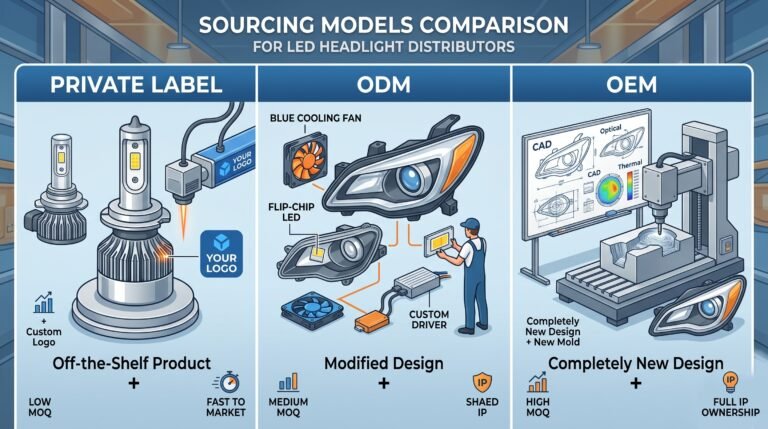
- OEM/ODM support
- Reliable production capability
- Clear warranty policies
At Xienauto, we focus on helping global distributors, wholesalers, and automotive businesses source reliable LED headlight solutions with professional technical support and customized service.
If you are evaluating a new headlight supplier quote or looking for a long-term LED lighting partner, contact our team for product information and sample evaluation.