Headlight Factory vs Trading Company: How to Tell Them Apart and Choose Wisely
1. Defining the Two Business Models (An Honest Look)
What is a Headlight Factory?
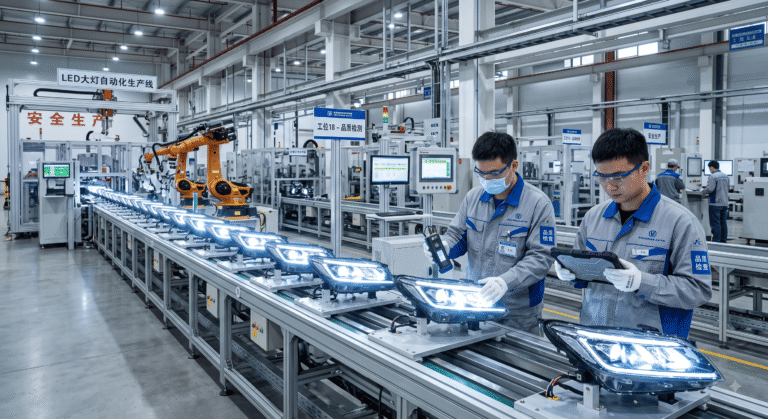
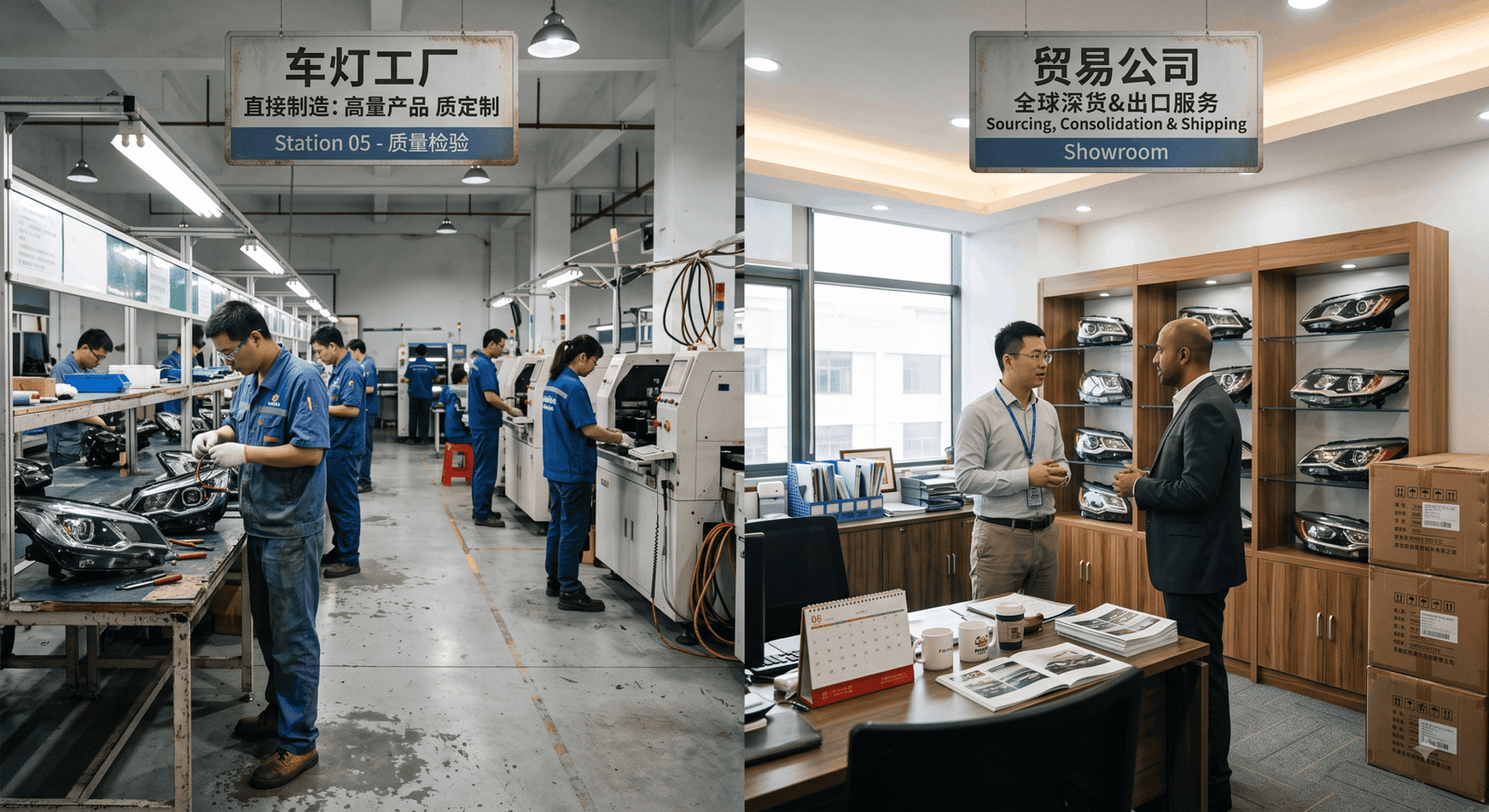
A direct factory, or manufacturer, is a company whose core business is the production of automotive lighting products. Depending on its capabilities, a manufacturer may operate its own production, assembly, testing, tooling, engineering, or quality-control processes.
Its primary strength is manufacturing capability and technical control.
However, not every factory has the same level of vertical integration. Some manufacturers produce most components in-house, while others rely on qualified suppliers for certain components and focus on assembly, engineering, testing, and final quality control.
What is a Trading Company?
A trading company typically does not manufacture all of the products it sells. Instead, it works with one or more domestic manufacturers and acts as an intermediary or supply-chain partner for international buyers.
Its core strengths may include supplier coordination, product sourcing, customer service, quality-control coordination, export documentation, and logistics management.
A good trading company can therefore provide value beyond simply adding a margin to a factory quotation. For buyers who need multiple product categories or smaller quantities, this supply-chain integration can be particularly useful.
2. The Pros and Cons of a Headlight Factory
The Advantages
- Competitive Pricing at Scale: Direct factory sourcing can be highly competitive, particularly for stable, high-volume orders.
- Direct Technical Communication: Buyers can communicate directly with engineering and production teams when discussing product specifications, tooling, optical design, or customization.
- Greater Manufacturing Visibility: Buyers can often gain more direct visibility into production processes, testing procedures, capacity, and quality-control systems.
- Customization Capability: Manufacturers with appropriate engineering resources may be better positioned to develop customized products or modify existing designs.
- Relevant Quality Certifications: Depending on the company, customers, and target markets, a manufacturer may hold certifications such as ISO 9001, IATF 16949, or product-specific certifications. Certification should always be verified against the actual company and scope.
The Limitations
- More Focused Product Range: A factory’s product range is usually concentrated around its own manufacturing capabilities and core product categories.
- Potentially Higher MOQs: Tooling, production setup, component purchasing, and production planning may make factories less flexible for very small trial orders.
- Communication Can Vary: Some manufacturers have experienced international sales teams, while others are more production-oriented and may provide less comprehensive export support.
- Supplier Management May Be Required: If you need products outside the factory’s core range, you may need to manage additional suppliers yourself.
Direct Headlight Factory
| Feature | Direct Headlight Factory |
|---|---|
| Pricing | ⭐⭐⭐⭐⭐ — Often highly competitive at suitable order volumes |
| R&D Capability | ⭐⭐⭐⭐⭐ — Strong potential for technical customization |
| SKU Variety | ⭐⭐ — Usually focused on its own manufacturing capabilities |
| MOQ Flexibility | ⭐⭐ — May require higher volumes for certain products |
| Manufacturing Visibility | ⭐⭐⭐⭐⭐ — Direct access to production and QC information |
| Communication | ⭐⭐⭐ — Depends heavily on the company’s export-sales team |
3. The Pros and Cons of a Trading Company
The Advantages
- Wide Product Selection: A trading company may source headlights, tail lights, fog lights, wipers, and other automotive products from different manufacturers.
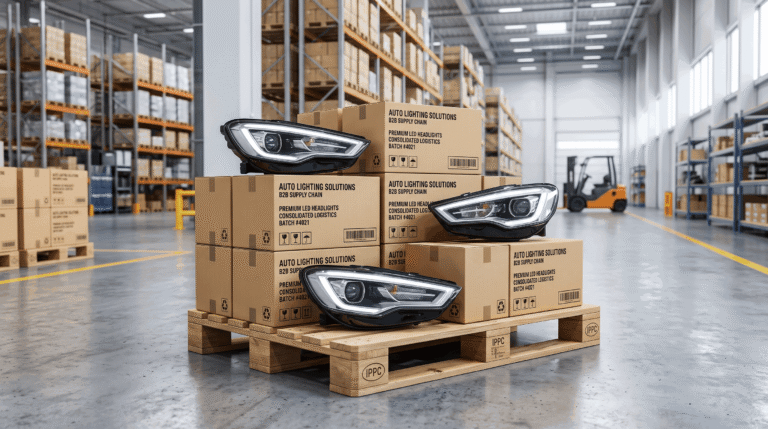
- Supply Consolidation: Multiple products from different factories can potentially be consolidated into fewer shipments.
- Flexible MOQs: Some trading companies can offer lower quantities by combining demand across different customers or suppliers.
- Export Support: Companies focused on international trade may provide dedicated support for quotations, documentation, shipping, and customer communication.
- Supplier Coordination: A capable trading company can coordinate multiple factories, product specifications, inspections, and shipping arrangements on behalf of the buyer.
The Limitations
- Additional Service Margin: The quotation may include a margin for sourcing, coordination, quality control, customer service, and export handling.
- Less Direct Production Control: The buyer may not communicate directly with the actual production facility unless the trading company provides transparent supplier access.
- Quality Depends on Supplier Management: The trading company’s performance depends significantly on how it selects, manages, and audits its manufacturing partners.
- Product Consistency Requires Management: When products are sourced from multiple factories, specifications and quality standards need to be clearly controlled.
Automotive Trading Company
| Feature | Automotive Trading Company |
| Pricing | ⭐⭐⭐ — Includes sourcing and service costs |
| R&D Capability | ⭐⭐ — Usually relies on manufacturing partners |
| SKU Variety | ⭐⭐⭐⭐⭐ — Can integrate products from multiple suppliers |
| MOQ Flexibility | ⭐⭐⭐⭐⭐ — Often more flexible for trial orders |
| Supply Consolidation | ⭐⭐⭐⭐⭐ — Strong advantage for multi-SKU purchasing |
| Communication | ⭐⭐⭐⭐⭐ — Often supported by dedicated export-sales teams |
4. How to Tell Them Apart: Spotting the True Identity
Choosing between a headlight factory vs trading company starts with understanding what the supplier actually does. No single test is sufficient, so buyers should use several verification methods together.
1. Analyze the Business License
Check the company’s registered business scope and legal entity information.
Terms related to manufacturing or production can indicate manufacturing activities, while terms related to trading, wholesale, or import/export may indicate a trading-focused business model.
However, a business license should be treated as a screening tool rather than final proof of manufacturing capability.
A company may have both manufacturing and trading activities, while some manufacturers may also operate separate sales or trading entities.
2. Evaluate the Quotation and Catalog
Look at the relationship between the supplier’s catalog and its claimed manufacturing capabilities.
A manufacturer will often have a relatively focused product range with deeper technical information about its core products.
A trading company may offer a broader catalog covering products from several categories and manufacturers.
This is not absolute, but it can be a useful first indicator.
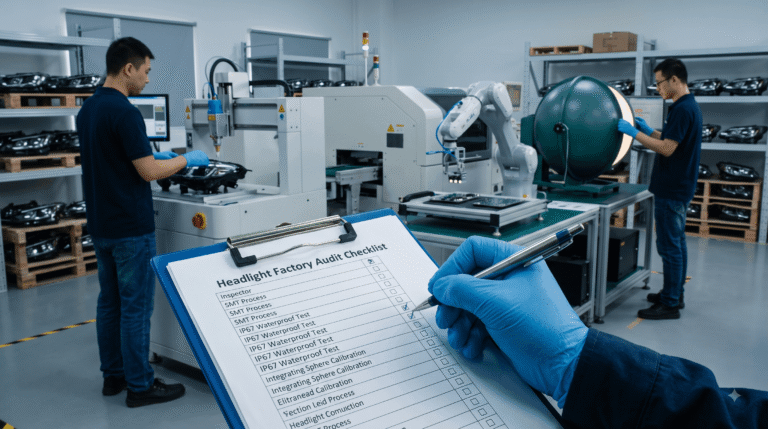
3. Conduct a Factory Audit (Virtual or Physical)
Ask the supplier to provide a live video tour or arrange an on-site factory audit.
Instead of simply asking whether they have an SMT line, examine whether they can demonstrate relevant manufacturing, assembly, testing, engineering, and quality-control processes that match the products they claim to manufacture.
For automotive lighting, useful areas to verify may include:
- Production and assembly areas
- Testing equipment
- Quality-control procedures
- Warehouse and material management
- Tooling and engineering capabilities
- Product traceability
- Relevant certification and audit records
The objective is not simply to find a machine. It is to verify whether the supplier has genuine and relevant manufacturing capabilities.
4. Check the Bank Account Details
Compare the legal company name shown on the supplier’s quotation, contract, invoice, and payment account.
The payment beneficiary should normally correspond to the contracted legal entity, or any difference should be clearly explained and documented.
This check does not prove that a supplier is a factory, but it can help identify inconsistencies between the sales entity, contracting entity, and payment recipient.
5. Decision Matrix: Which One Should You Choose?
There is no universally better choice between a factory and a trading company.
The right supplier depends on your order volume, SKU requirements, customization needs, purchasing stage, and internal supply-chain capabilities.
| Your Business Profile | Often Worth Considering | Reason Why |
| E-commerce Startup | Trading Company | Lower trial quantities and multiple SKUs can make market testing easier. |
| Retail Chain | Trading Company / Factory | A trading company can simplify multi-SKU sourcing, while a factory may become attractive for stable high-volume core products. |
| Scaling Brand | Factory + Trading/Sourcing Partner | Direct manufacturing can support core-product stability, while a sourcing partner can help manage complementary products. |
| Large Importer | Direct Factory | High-volume purchasing, customization, and long-term product stability can make factory-direct sourcing attractive. |
A Practical Way to Think About It
Instead of asking:
“Factory or trading company — which is better?”
ask:
“Which supplier model solves my current purchasing problem most efficiently?”
For example:
Market Testing → Flexible supplier with low MOQ and multiple SKUs
Stable Sales → Build direct relationships with key manufacturers
High-Volume Core Products → Consider factory-direct purchasing
Broad Product Portfolio → Use a capable sourcing or trading partner
This approach allows the supplier strategy to evolve as the business grows.
6. The Hybrid Model: The Best of Both WorldsThe choice does not always have to be either a factory or a trading company.
In many B2B automotive supply chains, a hybrid sourcing model can combine the strengths of both.
Factories with Trading or Sourcing Capabilities
Some larger manufacturers have dedicated export-sales or trading operations and may manufacture their core products while sourcing complementary products from qualified partner factories.
This can allow buyers to maintain a direct relationship with the manufacturer for key products while also accessing a broader product range.
Value-Added Sourcing
A capable sourcing partner can provide factory-direct access for core products while managing additional suppliers for related products.
For example:
Core Headlights → Direct Manufacturer
Related Lighting Products → Partner Factories
Quality Inspection → Centralized QC Process
Shipping → Consolidated Logistics
This model can be particularly useful for buyers who want manufacturing depth without managing every supplier relationship themselves.
Conclusion
When comparing a headlight factory vs trading company, neither model is automatically better for every buyer.
A factory may be a stronger fit when you need:
- High-volume purchasing
- Product customization
- Technical development
- Stable long-term supply
- Direct manufacturing visibility
A trading or sourcing company may be more suitable when you need:
- Multiple SKUs
- Lower trial quantities
- Supplier consolidation
- Export support
- Flexible purchasing arrangements
For many growing B2B automotive businesses, the most effective approach may be a combination of both: direct relationships with manufacturers for core products, supported by professional sourcing and supply-chain management for complementary products.
The goal is not simply to find the cheapest supplier.
The goal is to build a supply chain that provides the right balance of price, quality, flexibility, technical capability, and long-term reliability.
Frequently Asked Questions (FAQ)
Not necessarily.
A trading company may include a service margin, but its value can extend beyond simply reselling factory products.
A capable trading or sourcing company may provide supplier selection, product sourcing, quality-control coordination, export documentation, logistics management, and communication support.
For smaller buyers or companies purchasing multiple product categories, these services can reduce the internal workload required to manage Chinese suppliers.
A reputable trading company can establish quality-control procedures and coordinate inspections at partner factories, but buyers should not rely on the supplier type alone as a guarantee of product quality.
Quality should be controlled through:
- Clear product specifications
- Approved samples
- Inspection standards
- Pre-shipment inspections
- Certification verification
- Packaging requirements
- Traceability procedures
- Contractual quality requirements
The key question is therefore not simply “Is this a factory or trading company?”
It is:
“Does this supplier have a reliable and verifiable system for delivering the quality, consistency, and service that my business requires?”